

Introduction
As the global demand for electricity continues to rise, businesses and communities are searching for reliable and sustainable energy solutions. Traditional energy systems that rely on fossil fuels are becoming less desirable due to environmental concerns and rising operational costs. In response, hybrid energy systems have emerged as an innovative and efficient solution that combines multiple renewable energy sources such as solar, wind, and advanced storage technologies.
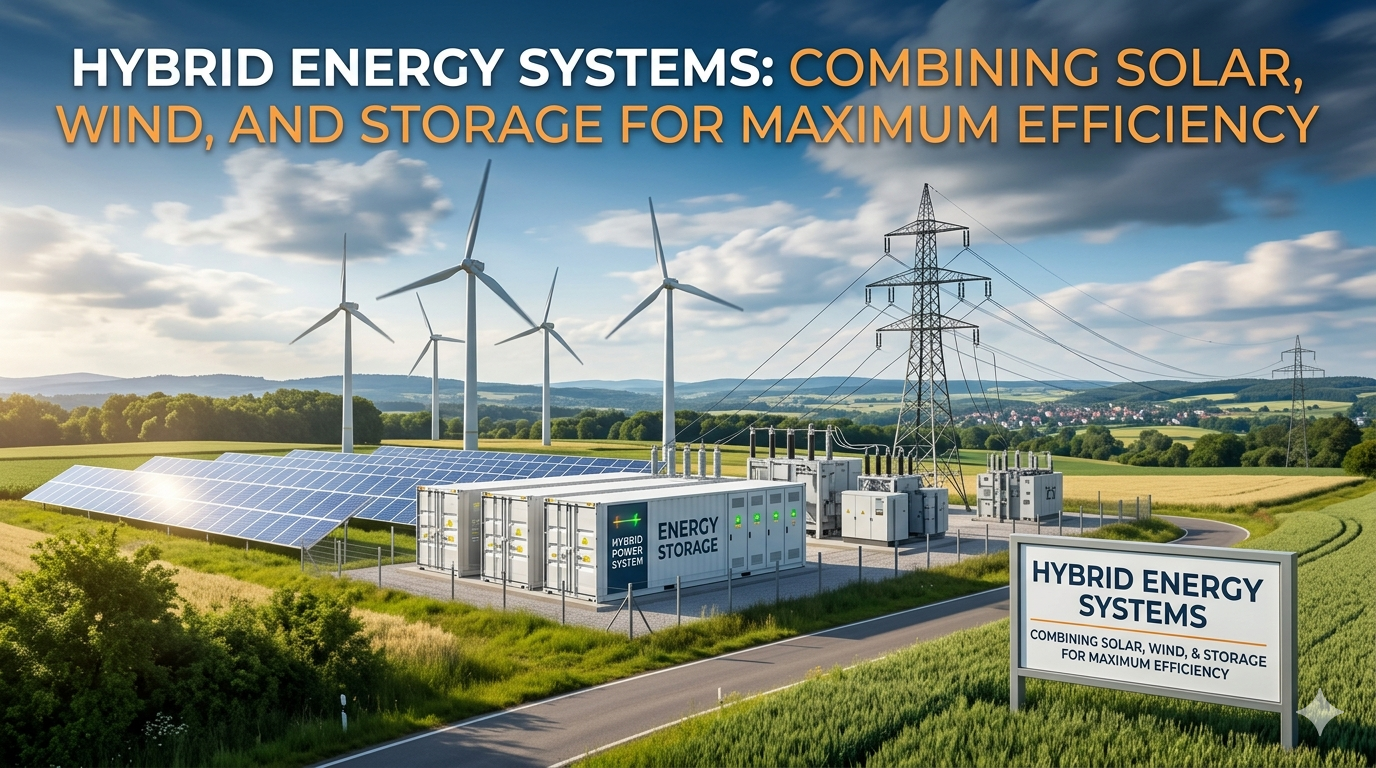
Hybrid energy systems are designed to maximize energy production while minimizing interruptions and waste. By integrating solar panels, wind turbines, and energy storage systems into a single network, these systems provide a consistent and efficient power supply even under changing environmental conditions. This makes hybrid energy systems one of the most reliable renewable energy solutions for residential, commercial, and industrial applications.
What Are Hybrid Energy Systems?
A hybrid energy system is a combination of two or more energy sources working together to generate electricity. Typically, these systems include renewable sources such as solar energy and wind energy along with energy storage technologies like batteries.
Unlike single-source renewable systems, hybrid energy systems ensure that electricity remains available even when one energy source is temporarily unavailable. For example, solar panels produce electricity during sunny hours, while wind turbines generate power during windy conditions. If neither source is producing sufficient energy, stored power from batteries can be used.
This integration of multiple technologies increases reliability and ensures that energy supply matches demand more effectively.
Key Components of Hybrid Energy Systems
Hybrid energy systems consist of several essential components that work together seamlessly to produce and store electricity.
1. Solar Panels
Solar panels capture sunlight and convert it into electrical energy. They are typically installed on rooftops or open land where sunlight exposure is maximum.
Solar energy is one of the most widely used renewable sources because it is abundant and environmentally friendly. During the daytime, solar panels generate electricity that can be used immediately or stored for later use.
2. Wind Turbines
Wind turbines generate electricity by converting wind energy into mechanical power and then into electrical power. They complement solar panels because wind patterns often differ from sunlight patterns.
For example, wind speeds may increase during the evening or night when solar panels are inactive. This makes wind turbines an ideal partner in hybrid energy systems.
3. Energy Storage Systems
Energy storage systems, usually in the form of batteries, store excess electricity generated during peak production periods. This stored energy can be used when production decreases or demand increases.
Battery storage plays a vital role in maintaining a stable power supply. Without storage, excess energy generated during peak hours would go to waste.
4. Power Control Systems
Power control systems manage the flow of electricity between energy sources, storage units, and connected loads. These systems monitor production levels, energy demand, and storage capacity to ensure efficient operation.
Advanced control technologies use automation and smart monitoring to optimize energy usage and reduce losses.
How Hybrid Energy Systems Work
Hybrid energy systems operate by intelligently managing energy production from multiple sources. The process typically involves the following steps:
- Energy Generation
Solar panels generate electricity during daylight hours, while wind turbines produce energy whenever wind conditions are favorable. - Energy Distribution
Electricity generated by renewable sources is first used to meet current energy demands. - Energy Storage
Excess electricity that is not immediately used is stored in battery systems. - Backup Supply
When renewable energy production decreases, stored electricity is released to maintain a steady power supply. - Smart Monitoring
Control systems continuously monitor energy usage and adjust distribution automatically for maximum efficiency.
This coordinated operation ensures reliable electricity generation throughout the day and night.
Advantages of Hybrid Energy Systems
Hybrid energy systems provide several advantages that make them an attractive choice for modern energy solutions.
Increased Reliability
One of the main benefits of hybrid systems is reliability. Since multiple energy sources are used, the system does not depend on a single source. If solar production decreases due to cloudy weather, wind turbines or stored energy can continue supplying power.
Higher Energy Efficiency
Hybrid systems optimize energy usage by capturing electricity from different sources. This reduces energy waste and improves overall efficiency.
Stored energy can be used during peak demand hours, reducing reliance on external power sources.
Reduced Energy Costs
Although initial installation costs may be higher, hybrid systems provide long-term savings by reducing electricity bills and fuel expenses.
Businesses and industries that use hybrid systems often experience significant cost reductions over time.
Environmental Sustainability
Hybrid energy systems reduce greenhouse gas emissions by minimizing dependence on fossil fuels. By combining renewable sources, these systems support environmental protection and contribute to a cleaner planet.
Suitable for Remote and Off-Grid Areas
Hybrid systems are particularly useful in remote locations where grid electricity is unavailable or unreliable. They provide consistent power supply without the need for extensive infrastructure.
This makes hybrid energy systems ideal for rural communities, farms, and industrial sites.
Applications of Hybrid Energy Systems
Hybrid energy systems are used in various sectors due to their flexibility and reliability.
Residential Applications
Homeowners can install hybrid systems to reduce electricity costs and increase energy independence. These systems ensure uninterrupted power supply even during outages.
Commercial Buildings
Businesses use hybrid systems to power offices, shopping centers, and hotels. Reliable electricity supply improves operational efficiency and customer satisfaction.
Industrial Operations
Industries often require large amounts of energy. Hybrid systems provide continuous power supply while reducing operational costs and carbon emissions.
Agricultural Sector
Farmers use hybrid systems to operate irrigation pumps, storage facilities, and machinery. This ensures consistent productivity even in remote areas.
Challenges in Hybrid Energy Systems
While hybrid systems offer many benefits, they also face certain challenges.
High Initial Investment
Installing solar panels, wind turbines, and storage systems requires significant upfront costs. However, these costs are gradually recovered through long-term savings.
System Complexity
Hybrid systems involve multiple components that require proper design and integration. Skilled professionals are needed to install and maintain these systems.
Maintenance Requirements
Regular maintenance ensures efficient performance. Batteries, turbines, and control systems must be inspected periodically.
The Role of Smart Technologies in Hybrid Systems
Modern hybrid energy systems are becoming smarter with the integration of advanced technologies such as artificial intelligence and remote monitoring.
Smart systems analyze energy usage patterns and automatically adjust energy distribution. This improves efficiency and reduces operational costs.
Remote monitoring allows operators to track system performance and detect issues early. This minimizes downtime and ensures reliable operation.
These technological advancements are making hybrid systems more efficient and user-friendly.
Future of Hybrid Energy Systems
The future of hybrid energy systems looks promising as technology continues to evolve. Researchers are developing more efficient solar panels, stronger wind turbines, and longer-lasting batteries.
Large-scale hybrid projects are being implemented worldwide to supply electricity to cities and industrial zones. Governments and organizations are investing heavily in renewable energy infrastructure.
As energy demand increases, hybrid systems will become an essential part of modern energy networks. Their ability to provide reliable and sustainable electricity makes them a key component of future energy solutions.
Conclusion
Hybrid energy systems represent a powerful solution for achieving reliable and efficient electricity generation. By combining solar panels, wind turbines, and advanced storage technologies, these systems ensure consistent power supply under varying environmental conditions.
Their ability to reduce energy costs, improve efficiency, and support environmental sustainability makes them an ideal choice for residential, commercial, and industrial applications. As technology advances, hybrid energy systems will continue to play a crucial role in shaping a cleaner and more sustainable energy future.